The redesigned site builds on the event center team’s existing use of DatoCMS, a headless content management system, with a restructured data model that improves organization and simplifies site maintenance for administrators. With this system, they can easily update events and ticket information and add engaging content, like videos, across various sections of the site. This approach not only keeps the website dynamic and up to date but also simplifies the team’s workflow, making their lives easier by reducing the need for external support for routine updates. Multiple contributors can now manage content effortlessly, ensuring effortless experiences for both the team and visitors.

Turning Clicks into Memories: A Website Built for Eventgoers
About
The Washington State Fair Event Center is home to the Washington State Fair, Spring Fair, Oktoberfest Northwest, Taste Northwest and Holiday Magic. In addition to these five signature events, the grounds of the Washington State Fair Event Center provides space for events, trade shows, workshops and gatherings year-round.
Problem Overview
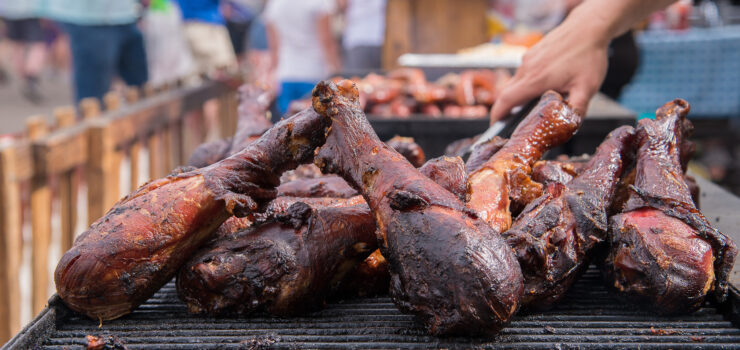
The Washington State Fair Event Center’s ethos extends beyond ticket sales, Fisher Scones, light displays, lederhosen and rides — its mission is to be Washington’s home to gather and celebrate for generations to come. Connecting people with the information they were looking for quickly, streamlining the ticket purchase process and incorporating a flexible design were top priorities of this redesign.
Research Findings Elevate Navigation and Findability
To create the best possible experience for users of the Fair’s website, we turned to the most valuable source of insight: Fairgoers themselves. Our user experience research team began at a booth at the Spring Fair, connecting with staff members, event attendees and vendors. This initial round of research allowed the team to gather firsthand insights into the on-site experience in the shadow of the Showplex and across the way from the Earthquake Burger stand. On the website, the team used SiteCrafting’s flagship data-gathering platform, Sitka Insights, to collect feedback and assess user success rates.
Stakeholder workshops and tree testing revealed additional pain points and frustrations. As one stakeholder observed, “most of the information is in there; it’s just cumbersome to find it.” To improve the navigation and findability, our team analyzed the gathered feedback, identified key areas of friction, and implemented intuitive pathways and interactive features that addressed user needs and streamlined the overall experience.
We also conducted extensive user research off-site, beginning with a survey that gathered over 4,000 responses. Additionally, a poll on the Fair’s website engaged an impressive 40,000 participants. By analyzing this data, we uncovered key trends and user needs that would inform our redesign and development efforts.
Our key findings:
- Ease of Access to Information: Users want to find activities and events quickly, which requires an intuitive and well-structured navigation system.
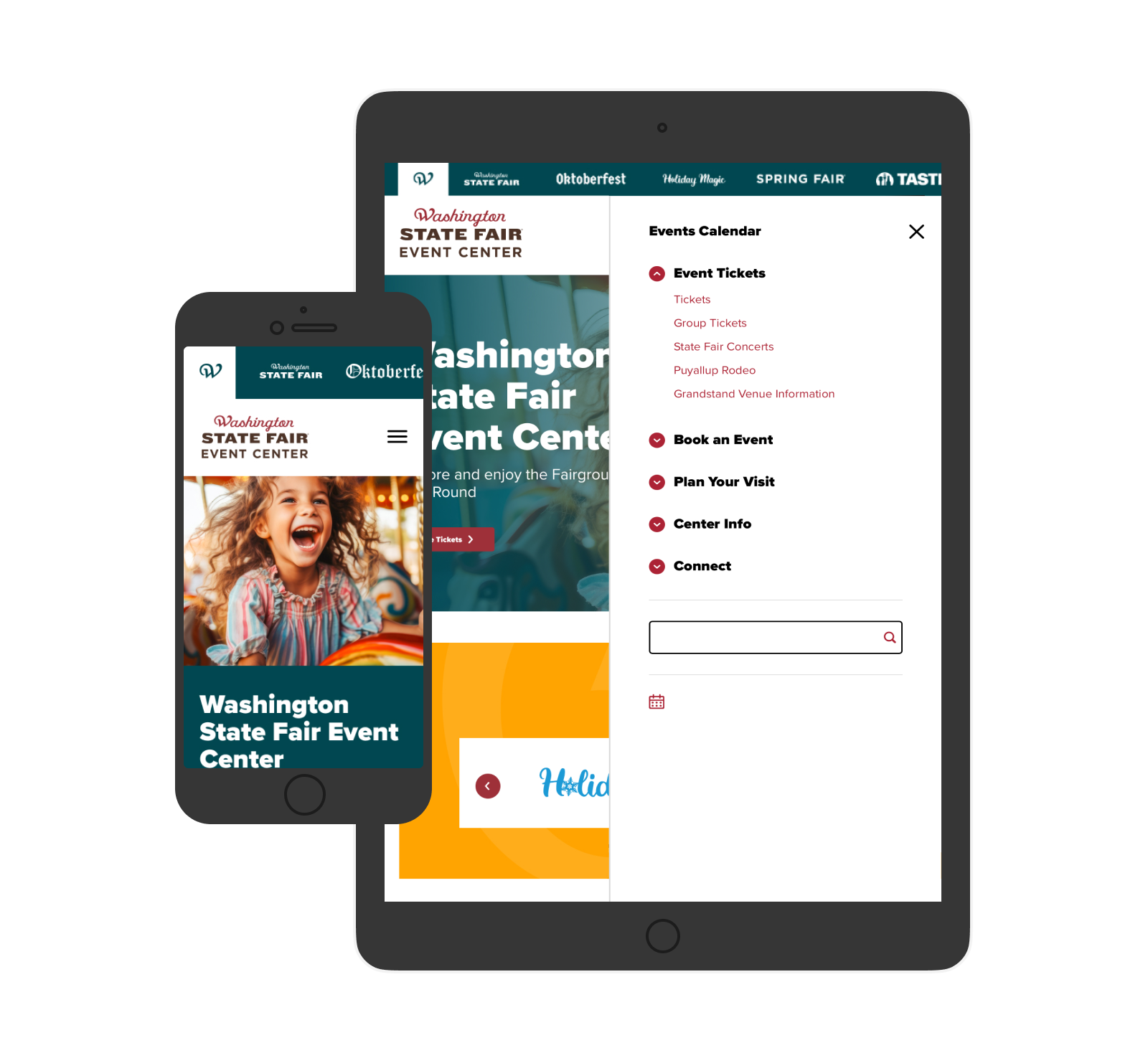
- Mobile Optimization is Essential: While many visitors use the website to plan their trip in advance, they also rely on their mobile devices for real-time information during their visit to the Fair. Ensuring a seamless experience across both desktop and mobile became a top priority.
- The Fair as a Tradition: Beyond just an event, the Fair holds deep personal significance for many attendees. One Fairgoer even shared that he and his wife were engaged on the rollercoaster. These stories reinforced the importance of honoring the Fair’s legacy and creating a digital experience that reflects its traditions.
Our approach
We created a strategy to develop a website that balances efficiency with the Fair’s rich tradition. The new design prioritizes:
- Enhanced search and navigation tools to help users quickly locate events and activities.
- A mobile-first approach, ensuring easy access to real-time information.
- Storytelling elements that highlight the Fair’s history and the personal connections people have with it.
We didn’t just design a website. We built a digital extension of the Fair’s enduring legacy. And yes, as part of our on-site research, we rode the rollercoaster, ate scones, and found time to enjoy an Earthquake Burger. Of course, this was all in the name of research and the best possible user experience.
You Can Find What You’re Looking for (so Your Heart Won’t Palpitate)
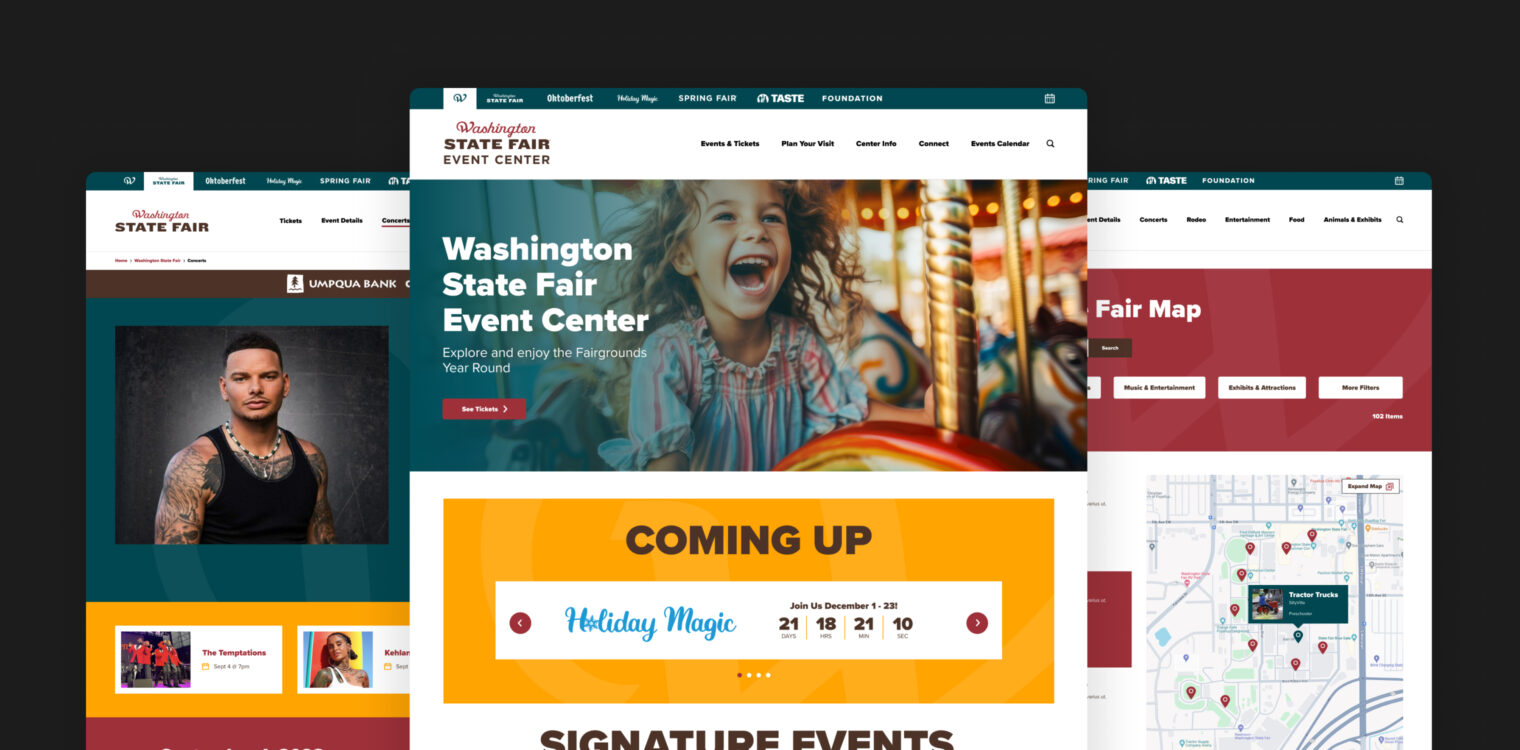
To enhance the user experience, the new site incorporates intuitive navigation pathways tailored to Fairgoers’ needs. Strategic event pathways in the global navigation direct users to signature events, year-round activities and ticket purchasing. An interactive event finder allows users to easily locate events based on their preferences, boosting discoverability. The design prioritizes mobile usability with responsive layouts that seamlessly adapt to all devices. Additionally, an interactive map was included to help visitors plan their trips with ease, reflecting the Fair’s commitment to accessibility and convenience.
Driving ticket sales was a key focus of the design updates, with strategic emphasis on purchase pathways across the site. Calls-to-action for Event Tickets, Events Calendar and Book an Event are prominently featured in the main navigation. Video integration on the homepage and throughout the site provides visitors with a preview of the Fair’s signature events, encouraging them to plan their visits. These design improvements simplify the purchasing process and increase user engagement, aligning the site’s functionality with the Fair’s business goals.
Empowering the Fair with Content Control
User-Centered Design for a Seamless Experience
The redesigned website prioritizes user needs, ensuring Fairgoers can easily find information and take action. A refined navigation structure and mobile-friendly design make planning visits and purchasing tickets effortless. Insights from user behavior and accessibility best practices guided the design, creating an intuitive experience that meets the diverse needs of the Event Center’s audience.
A Unified Social Media Strategy for Year-Round Success
SiteCrafting developed a comprehensive social media strategy for the Event Center, aligning content creation with the organization’s mission and marketing goals. The strategy was informed by a social media workshop and an audit of past activity, ensuring a structured approach to engagement, storytelling, and brand awareness. The new strategy establishes content criteria, ensuring posts are timely, mission-driven, and supportive of event promotion. The plan also includes tailored strategies for each platform, optimizing content for Facebook, Instagram, TikTok, YouTube, X and LinkedIn. Audience personas were created to guide messaging, reflecting the diverse groups attending events. With a clear, consistent brand voice and event-specific tone, the strategy empowers the team to strengthen connections with their community year-round.
Connecting Eventgoers in Meaningful Ways
Streamlined navigation and optimized purchase pathways make it easy for visitors to explore events and plan their trips. As research insights revealed, the events that take place at the Event Center are more than destinations for fun. The fully responsive design meets visitors where they are (the majority is on mobile) and evokes the emotional connection people feel for all of the signature events.
Now, as it celebrates 125 years, the Washington State Fair Event Center’s website is more than just a platform for events; it reflects the organization’s brand and tells the story of the vital role it plays in engaging local businesses, community members — and millions of eventgoers each year.
The team went above and beyond to navigate challenges and ensure a smooth launch. Their dedication, problem-solving and clear communication made a significant impact, and we truly appreciated feeling like they were right there with us every step of the way.
Contributors











Next Case Studies
Vancouver Clinic
Transforming a Healthcare Website to Match Its Bold Vision
Read Vancouver Clinic Case Study