
I will never forget the professional panic I felt when I realized the scheduled tweets published to the social media accounts I managed were off-topic from the online conversation at the moment.
It was the Great American Shakeout, a holiday that you may or may not be familiar with because it falls under the banner of “Requisite Content” for social marketers in a specific subset of industries. The tweets were scheduled days in advance and I was at a conference in Seattle while #ShakeOut tweets published against the backdrop of a global panic over the Ebola virus.
Irrelevant, tone deaf, embarrassed — I felt all the feels and did my own version of a drop, cover and hold on from a conference charging station.
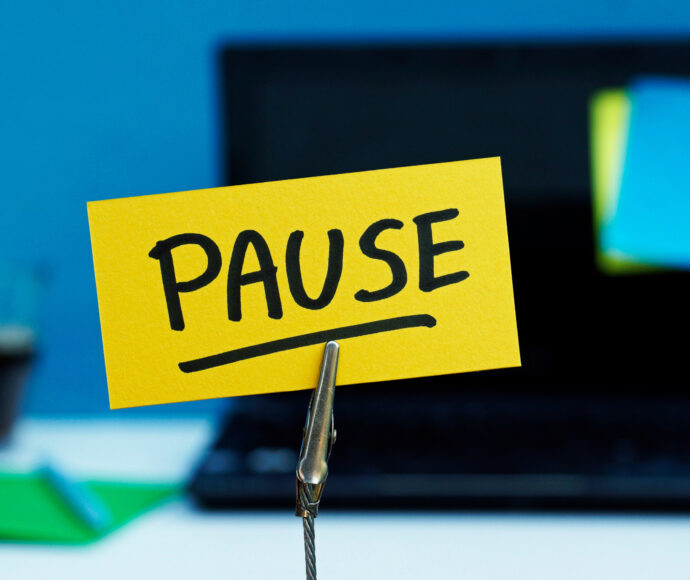
Since that time, pausing social media has become part of every social marketer’s strategy. The world does not have a shortage of crises, tragedies and negative news cycles. Social media is nothing if not The Great Amplifier. At its best, it turns the volume up on ideas, issues and information. The shadow side of that can feel noisy, dark and overwhelming when tragedy strikes.
So, what do you do with your social media content when the world is falling apart? Let me walk you through a few things we think about at SiteCrafting as we watch our feeds fill with a collective conversation around shared experiences and emotions.
Ask Yourself: Does the World Need to Hear from Our Brand Right Now?
Content for the sake of content is just stuff — and the world doesn’t need more stuff. This especially rings true when the majority of the conversation on the internet is related to an event or issue bigger than yourself and your brand. Conduct a digital read of the room and check in with your team to see what their social feeds are displaying. The goal of social media content is to add value to your audience. No value for the moment = no post.
Hit Pause for 24 Hours and Re-Evaluate.
When in doubt, pause for 24 hours and re-evaluate the online conversation. News cycles can move quickly and the conversation online moves even faster. Recently when Roe was overturned (something that was equal parts expected and devastating), we paused our social activity for the weekend and scheduled to re-evaluate on Monday. This did two things 1) It gave our marketing team, all women, emotional space to grieve with the collective and 2) Demonstrated our commitment to caring about how we show up in social spaces.
Borrow a Page from Someone Else’s Playbook
Pay attention to what your peers and the brands you trust and respect are doing and use their actions — or inaction — to inform your decision. On Friday, March 13, 2020, Breonna Taylor was murdered by police officers in her home. On Monday, May 25, 2020, George Floyd was murdered by police officers in Minneapolis, Minnesota. They were not the first Black humans to be murdered by police. The outcry for justice on the internet was loud — and rightfully so. We knew we needed to leverage our position and privilege to speak out against the horrors of injustice, we were just so horrified that we didn’t know where to start. So we looked to other brands who we respect (REI, Metro Parks Tacoma) and let their responses lead us to our choice to post a statement.
Educate Your Team and Leaders about Your Decision and Your Plan
A little bit of communication can go a long way to connect people internally with your strategy. As the keeper of the social media accounts, you are also responsible for reputation management, sales, marketing, brand strategy, crisis communications and relationship building. Sharing your plan with the teams internally who rely on your social media accounts to support their efforts need to know that you are paying attention and acting in the best interest of your brand.
Sample language for when you choose to pause:
The social media team is paying attention to the conversation online around [insert topic/crisis/circumstance here]. At this time, the majority of the conversation is related to [aforementioned issue] and we are pausing our social media content for [period of time]. We will keep a close eye on the conversation, monitor hashtags, and readjust and resume our activity when it feels appropriate.
Our priority is protecting our brand and presenting engaging content to our audience. We are also watching our peers and colleagues on social media to help inform our decision to resume. If you have questions, please do not hesitate to reach out to [contact].
Sample language for when you resume:
As of [date, time], the social media activity on our accounts resumed. Social media content was paused for [timeframe] and was resumed because the conversation online no longer centers on [insert topic/crisis/circumstance here]. If you have any questions about the content that has been readjusted, please do not hesitate to reach out to [contact].
Respect, Reflect, Repeat
If we want to exist in the online spaces with the people we want to engage with, we must also learn to measure the relevancy of our content and the collective conversion. Pausing your social media calendar takes courage but we have found that it is an action with little risk and high reward.
Over the years many brands have learned that sometimes the right thing to say is nothing at all. People are savvy and will hold brands accountable if words and actions are not in alignment. The best way to avoid a social media faux pas is to think through your response — or a request to respond — and make sure your response isn’t perceived as capitalizing on collective emotion.
A friendly reminder that it’s okay to pause your social media campaigns and step away from the internet. Take care of yourself, your teams and each other.
— SiteCrafting (@sitecrafting) May 26, 2022