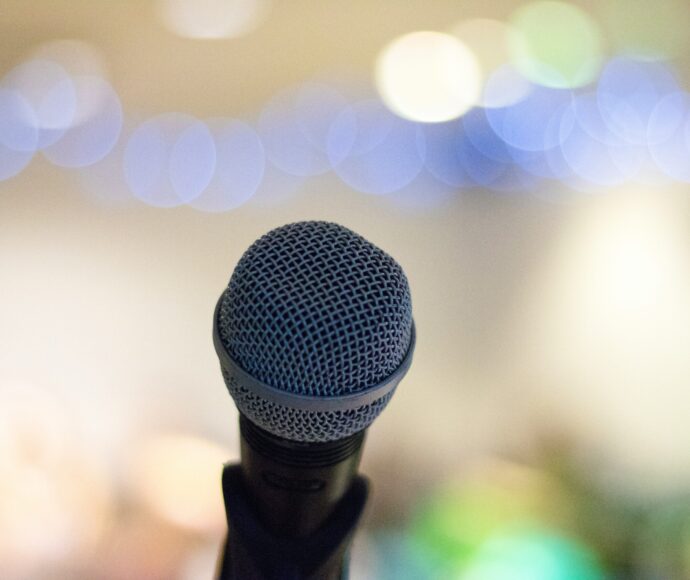

I love speaking at conferences and events. While some people recharge in solitude and others thrive in a crowd, I think of myself as a performavert. That means I’m at my best with a mic in hand or clipped to my ear, standing in front of a group, sharing what I know and learning from the room in real time.
But it’s not the stage time that lingers with me afterward. It’s the Q&A.
Not the questions I do answer, but the ones I don’t get to. The ones that surface as the host signals we’re out of time or the quiet, brilliant questions someone emails me days later. The ones that keep me thinking for years.
A few questions have followed me around longer than most. And I think I finally have better answers for them.
Not Sure What to Post
This always comes up as it relates to a range of industries, such as that time I went blank when asked for advice about what to post to a library system social media account. In the moment I was hopped up on the adrenaline rush of the stage and caught up in the library part of the question. In hindsight, I see it’s not a question of industry or platform, but instead audience.
Here’s what I would say now:
Start by following your followers. Your most loyal patrons, the ones who attend events, check out books and comment on your posts will point the way. What are they posting, sharing, liking and enjoying? That’s where you’ll find the good stuff.
Also give your staff room to play. The posts that spark joy for the people who work there are often the same ones that spark joy for the people who walk through the doors. A silly shelfie, a book rec from a librarian who usually works behind the scenes, a storytime blooper, if it delights your team, there’s a good chance it’ll delight others.
Advice for Engaging with Influencers
When I was asked for advice about engaging with influencers during a speaking gig in the summer of 2024, I paused and said no. My answer was short, and my cynicism was on full display. At the time, it was hard to take the question seriously, when it feels like anyone with a gym selfie is a fitfluencer and anyone with a brunch photo is a foodfluencer. But time and space have given me room to think. I’ve spent more time considering what “influencer” actually means, and I’ve come to believe that the most meaningful partnerships aren’t about hashtags or follower counts. They’re about trust. The best influencers are often the people already influencing the communities you care about, whether or not they call themselves one.
As it relates to working with influencers, it’s not necessarily about who you are working with but how it differentiates you from everyone else working with influencers. I’m more inclined to scroll past an opportunity to work with someone who has a large following and runs their account like a business and opt for user-generated content. Your audience is always your best bet. User-generated content is like gold, its form and visibility might fluctuate like market prices, but its value is timeless. Trends come and go, algorithms shift, but authentic content from real people always holds worth. It’s the kind of asset that gains meaning over time, not because it’s rare, but because it’s real.
How Do You Stay Ahead of Trends and Changes?
Sometimes you don’t. And that’s okay.
Staying “ahead” of trends can be a trap. What’s trending is always shifting and often subjective. What matters more is how well you know your audience.
When you really know your audience — know what they value, how they communicate, what’s exciting or frustrating in their world — you don’t have to chase trends. You’ll recognize the ones that matter. And when something new catches on before you’re ready, your deep understanding of your audience helps you adapt quickly and authentically.
Knowing your audience is always the best play. It’s what keeps your decisions grounded when everything else is moving fast. Trends will shift, tools will change, but the people you’re trying to reach, that’s the constant worth investing in.
The Cringe Stuff Stays Too
While we’re talking about what sticks, I’ve said things on stage that I’ve cringed about later. My teammate Tiffany recently quoted me back to myself in a conversation about this very thing.
“Is it cringey or is it you being vulnerable?”
At the risk of being both, here goes.
There was one moment in a particular session about social media strategy at a conference in Seattle when I raged about the many monikers used to describe social media professionals, “guru” being at the top of that rant. Afterward, someone kindly reminded me that in many cultures, it’s a title of deep respect and meaning. They were right. However, five years ago I heavily steeped in boredom for all of the clever ways my colleagues referred to my talent and expertise. I saw things differently five years ago than I do today.
That moment taught me something, not just about cultural context or the weight of a word but about the importance of giving ourselves room to evolve. The things that make us cringe in hindsight are often just markers of who we were and how far we’ve come. Looking back, it’s clear that growth doesn’t always look graceful in real time. But if we let it, the lookback can offer perspective, humility and a reminder that being open to change is a strength not a flaw.
Not Sure Where to Start? Copy Someone. Really.
If you’re feeling stuck — unsure what to post, try or experiment with — borrow a page from someone else’s playbook.
Imitation can lead to inspiration. See what others in your space are doing. Mimic a structure, try a voice, riff off an idea. Then pay close attention to where it takes you.
You’ll either learn that it doesn’t feel like you (which is helpful) or you’ll unlock a direction you never would have found on your own. Either way, you’re in motion and that’s the hardest part.
Some questions deserve a second answer. Some cringeworthy moments deserve reflection. And sometimes the best thing a stage gives you isn’t the mic or the spotlight, it’s the conversation that keeps unfolding long after the lights go down.