How Keyword Research Helped Us Pivot (A Lot)

How Keyword Research Helped Us Pivot (A Lot)
Maintaining good organic traffic for your website can be difficult. I’ve said before, SEO is like a long-term relationship, which requires ongoing work and attention. But what happens when life throws a curveball (or a handsome viscount) your way? How can you maintain balance when Google has changed its algorithm, the VP has new goals, and someone is asking why your website isn’t ranking #1 for XYZ?
The answer is data. Specifically, keyword research and your website analytics.
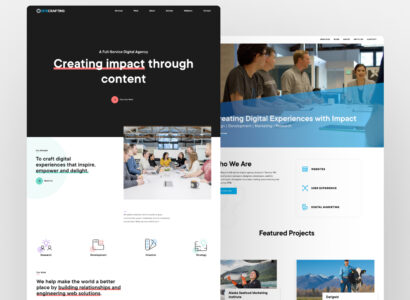
In the past six years, we’ve launched two updates to the SiteCrafting website, one in 2018 and one earlier this year. Our brand and goals have changed and Google’s algorithm has changed multiple times but one of the ways we’ve been able to pivot quickly to changing needs is relying on strategy, keyword research and our analytics.

Goal: Increase organic traffic and showcase services
Four years ago, when we launched the previous version of our website, our organic completely tanked. We went from an average of 300 organic users per day to 86 organic users.
The good news is we knew it would happen. It was a strategic decision we made when updating our website. There were a large number of blog posts about development that were no longer relevant or were drastically out of date. Plus, the type of traffic that these blogs brought to our website wasn’t the type of visitor that turned into a business lead.
So, we pivoted, knowing that we would need to find a good strategy to increase our organic traffic. We wanted to attract more qualified visitors and showcase our other services beyond design and development.
We relied on keyword research to show where our website was ranking well and areas where we could improve. We found that SiteCrafting ranked well for web design and web development but not for our other services.
In 2018, we also created a new Services section with individual service pages that included information about each of our services, examples of our work and how we can help our clients succeed with the goal of increasing our organic rank for keywords related to our services, like digital marketing, web design, user experience and user research.
New Goal: Showcase expertise, impact and value
The evolution of our brand led to an update of website goals, as well as an entire website redesign that began in 2021. Instead of focusing on showcasing our work and services, the goal of the new website was to go beyond telling you about our work to showing how our work has impact on our clients and community.
We turned again to our website analytics to evaluate how our pages were performing. We found that the service pages we created were performing how we expected.
In the year after launch in 2018, the service pages (all of them) captured only 0.72 percent of our overall users from organic traffic. Compare that to one blog post with the highest organic traffic, which captures 33 percent of users.
What we did see was an increase in engagement. While the traffic was drastically lower than we anticipated, the time on page and average pages per session from each user was high with an average of 2.37 pages per session and a nearly 2-minute session duration from organic traffic.
Unfortunately, that increase in engagement didn’t lead to an increase in leads. So when we began planning for the brand update and website redesign, we decided to pivot — again.
New strategy: Streamline, optimize and evolve
We used keyword research to highlight new opportunities for content across the new website, focusing more on blog post topics rather than page content. In addition, we scrapped the individual service pages and streamlined our content into a single service page.
As with our overall brand refresh, this strategy has evolved throughout our website redesigns and changing goals.
The benefit of leaning on our data and keyword research is that we have been more efficient with our time, especially when working on our own website in between client projects. It’s allowed us to update and expand our work, rather than going back to the drawing board every time something changes.